Scalable interfaces for dismounted soldiers–displaying multiple video feed sources simultaneously
Posted by Tal Oron-Gilad in HRI, Military & Law Enforcement Applications, robotics, UAV on February 16, 2011
- One way to enhance soldiers’ orientation and SA is by adding various sources of information (including feeds from unmanned systems) to generate a broader perspective of the environment.

This is a demonstration of a key-hole effect, where it may be difficult to determine where in the map (left) the feed shown from the UAV is located.
- Researchers and practitioners have recently begun to examine the use of several types of unmanned systems combined.
- In order to do this well, it is important to minimize the visual load imposed on the soldier, a load that is obviously increasing due to multiple parallel displays.
- Additional views can increase operator comprehension of the situation but may also cause overload and confusion. Often, too many choices, characteristics and applications may even harm the operator as much as lack of choices.
Our effort aims to examine the needs of dismounted soldiers in a multiple video feed environment (i.e., more than one source of information can be provided at a time) and to identify displays devices and interfaces that can support dismounted soldiers in such more complex intelligence gathering missions.
Combining UAV and UGV feed.
- UAVs are meant to deliver the “larger” picture and are necessary for orientation tasks.
- UGVs are meant to deliver a more focused and specific image.
- Combination of the two should be advantageous when information is complex or ambiguous e.g., one may want to detect a target and then identify its features in more detail.

This is an example of a combined display, where both UAV and UGV video feeds are shown in addition to the aerial map. Waypoints of interest are marked on the map.
Coming soon – experimental results of attentional allocation and performance on intelligence gathering tasks in such displays.
Switch and Deliver: Display Layouts for MOMV (Multiple Operator Multiple Video feed) Environments
Posted by Tal Oron-Gilad in Homeland security, Military & Law Enforcement Applications, MOMU, UAV on February 7, 2011
‘Switch and Deliver’ is a research project directed to design and develop tools/techniques and procedures to aid operators in handling Multiple Operator Multiple UAV (unmanned aerial vehicles) environments. It aims to identify what information and which tools and layouts will decrease switch-costs and improve overall mission performance. Nevertheless, most tools/techniques can be generalized to any Multiple Operator Multiple Video feed (MOMV) environments, where control of multiple video sources, task switching and/or coordination with other operators are necessary for mission success. In a paper , to be presented shortly in COGSIMA 2011, we describe a study conducted on proficient operators, examining three display layouts.where we examined how the operating interface facilitates handoffs and video feed switching among operators.
Here are examples of the Layouts we have been examining:

![clip_image002[4]](https://talorongilad.com/wp-content/uploads/2011/02/clip_image0024.jpg "clip_image002[4]")
![clip_image002[6]](https://talorongilad.com/wp-content/uploads/2011/02/clip_image0026.jpg "clip_image002[6]")
- In the Baseline layout (far left), contains four equal sized windows: three windows show 3 different video feeds, and one window shows the C2 map. The payloads which were controlled by the user had an icon of a person on the top left side of the video.
- In the Adaptive layout (center) window sizes change automatically according to user’s operations (i.e., time spent on window and performing operations in the window). Thus, in any defined time, the window that was most ‘active’ was larger than the other three windows.
- In the User Controlled layout (right) , window sizes changes as well, except not automatically. The user selected which window to enlarge. Thus, the large window was the one the user selected to enlarge.
Success rate, detection times, payload ‘energy’ (i.e., how much movement was done by the payload) and Subjective evaluations and workload of the very experienced operators that participated in this study raised some interesting issues regarding fixed versus adaptive window size in MOMV environments.
- This study is only one of the many studies performed in the framework of this research project. The necessity and importance of tools in reducing operators’ workload and improving mission performance was again reinforced. In future studies, we plan to further explore the interactions that emerged.
Presentation title: Switch and Deliver: Display Layouts for MOMV (Multiple Operator Multiple Video feed)Environments.
Talya Porat (Ben-Gurion University, Israel)
Tal Oron-Gilad (Ben-Gurion University, Israel)
Jacob Silbiger (Synergy Integration Ltd., Israel)
Michal Rottem-Hovev (Israel Air Force, Israel)
VibroTactile “On-Thigh” Alerting System in The Cockpit
Posted by Tal Oron-Gilad in News, Tactile & Multimodal displays on January 23, 2011
Here is a new study that we have conducted on applying vibrotactile alerts on the thigh of a seated operator. The thigh is a novel placement that has not been used previously in a similar way.
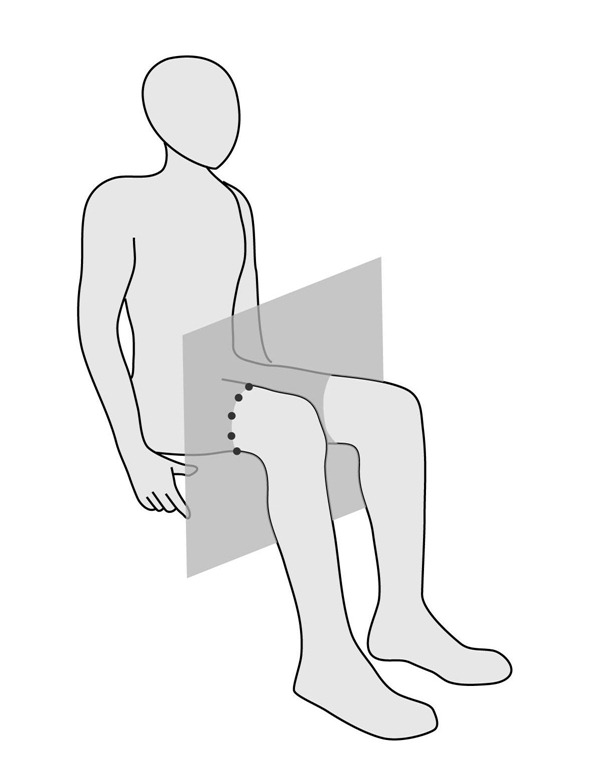
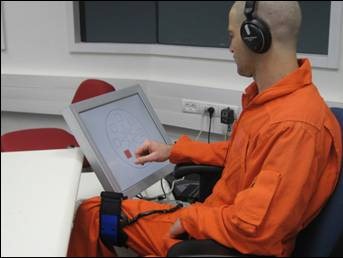
To read more see: Salzer, Y., Oron-Gilad, T., Ronen, A., and Parmet, Y. (2011), VibroTactile “On-Thigh” Alerting System in The Cockpit, Human Factors. available online at :http://hfs.sagepub.com/content/early/2011/04/06/0018720811403139
Background: Alerts in the cockpit must be robust, difficult to ignore and easily recognized. Tactile alerts can provide means to direct the pilot’s attention in the already visual-auditory overloaded cockpit environment. Objective: This research examined the thigh as a placement for vibrotactile display in the cockpit. Here we: a) report initial findings concerning the loci and properties of the display, b) evaluate the added value of tactile cueing with respect to the existing audio-visual alerting system, and c) address the issue of tactile orienting; whether the cue should display ‘flight’ or ‘fight’ orienting. The tactor display prototype was developed by a joint venture of Israel Aerospace Industries (IAI), Lahav division and the Ben Gurion University of the Negev (patent pending 11/968,405). Methods: Vibrotactile display mounted on the thigh provided directional cues in the vertical plane. Two vibrotactile display modes (eight and four tactors) and two response modes (compatible, i.e. flight (away from hazard) and inverse, i.e. fight (toward hazard)) were evaluated. Results: Vertical directional orienting can be achieved by a vibrotactile display assembled on the thigh. Four tactors display mode and the compatible response mode produced more accurate results. Conclusion: Tactile cues can provide directional orienting in the vertical plane. The benefit of adding compatible tactile cues with the visual and auditory cues alone has yet to be reinforced. Nevertheless, flight mode, i.e. directing towards escape from hazardous situations, was preferred. Application: Potential applications include providing directional collision alerts within the vertical plane, assisting pilot’s elevation control, or navigation.
The Effect of In-Vehicle Warning Systems on Speed Compliance in Work Zones
Posted by Tal Oron-Gilad in in-vehicle, speed, Transportation & Safety on January 17, 2011
This study investigated the effectiveness of in-vehicle information on drivers’ compliance to speed limits in work zones. It was conducted while I was still at UCF with my students (now colleagues) James Whitmire the 2nd and Justin F. Morgan, and my dear friend and mentor P.A. Hancock.
Why work zones?
Highway work zones are hazardous roadway environments.
- Significantly more dangerous than comparable pre-work zone roadways in the same areas (Khattak, Khattak & Council, 2002).
- Crash rates increase by ~ two-fold on highway segments under construction compared to the same highway segments measured previously without the presence of work zones.
- The majority of people killed in work zones are drivers and vehicle occupants (~85%).
- Speed has a main contributory role in work zone crashes (Stackhouse & Tan, 1998). This overt behavior is also recognized by the drivers themselves.
IVIS (in-vehicle information systems)
- In-vehicle systems could be used to convey operational information for the driver especially in difficult and demanding conditions (Vashitz, Shinar, & Blum, 2008).
- Research efforts have provided evidence that in-vehicle information technologies can positively affect driver compliance and improve safety, particularly with regard to driving speed (Brookhuis & de Waard, 1999).
- Long term effects of a first generation intelligent speed adaptation device found an initial decrease in the time spent over the speed limit. Yet, compliance rate attenuated with time (Warner and Åberg, 2008).
- Most contemporary in-vehicle displays do not place excessive visual demand on the driver in normal driving circumstances.
- Work has been accomplished pertaining to the in-vehicle presentation of audio and/or visual stimuli. Very little has been done to examine the delivery of in-vehicle audio and visual warning systems specifically to enhance safety in work zones.
What did we test?
- Whether in-vehicle information devices can influence driver speed compliance behavior in work zones
- Modality effects, i.e., auditory messages may be more effective for the initial phase of entering the work zone but more intrusive later on within the work zone

Fig. 1 – The experimental setup in the visual condition (visual warning were presented to the right of the driver)

Fig. 2. Images of the visual in-vehicle warning messages. In-vehicle messages corresponded to traffic signs posted in the work zone area.
What did we find?
Participants spent an average of 44%, 7% and 18% of the time, for the control, audio and visual condition, respectively in violation of posted speed limit. The average violation duration for the control group was significantly greater than that for either the audio or visual groups (Fig. 3). Average violation speed was 55 (9), 50 (5) and 47 (17) Km/h for the control, audio and visual groups, respectively (posted speed limit was 45 Km/h).


Fig. 3. Average duration of speed violations, by group. Error bars show standard error. Fig. 4.Entrance to the work zone. Notice the stimulus-response differences once entering the workzone
Drivers with visual\auditory warnings most frequently violated the safe speed upon entering the work zone. However, once they were alerted to this state they typically did not have additional speed violations. Control drivers did not display such a pattern. Differences between auditory and visual conditions were present in the time to compliance ; while drivers in the audio condition took 6 seconds to respond, their counterparts in the visual condition took 22 seconds to respond (Fig. 4).
- The final outcome of both modalities was the same. The longer time to compliance for the visual channel system suggests both the dominance of the auditory channel for this type of information, as well as, the importance of timely alerts through IVISs.
- As one would predict, based on multiple resource theory (Wickens, 2002), the findings of this study suggest the necessity of redundant signal modalities in driver-messaging systems. Specifically, in order to achieve the best compliance with messages presented to the driver, those messages need to consist of a specific temporal sequence of modalities. The ideal driver message should begin with a brief auditory and visual messages (of a duration no greater than 6.0 seconds), followed by a visual warning message only which remains visible until compliance or acknowledgment.
- In closing, further research is called for in the specific auditory and visual characteristics of such messages. The density of auditory and visual information, as well as the formatting of text-based messages on in-vehicle displays, remains a largely unknown contributor to the speed and accuracy of a busy driver’s interpretation of the information.
To read more:
Whitmire, J., Morgan, J.F., Oron-Gilad, T. and Hancock, P.A. (in press) The Effect of In-Vehicle Warning Systems on Speed Compliance in Work Zones, Transportation Research part F. Accpeted April 2011.
The Effect of In-Vehicle Warning Systems on Speed Compliance in Work Zones, Whitmire, James; Morgan, J.F.; Oron-Gilad, Tal; Hancock, P.A., Human Factors and Ergonomics Society Annual Meeting Proceedings 2010, Surface Transportation , pp. 2023-2027(5)
The perception of pedestrians by elderly (65+) and mature (28+ with more than 10 years of driving experience) drivers
Posted by Tal Oron-Gilad in News, Transportation & Safety on January 6, 2011
This is a new publication related to hazard perception among elderly drivers. We compared HP abilities using a driving simulator and the video observation technique. As much as the simulator graphic language allowed, our simulated scenarios were replications of the observed video scenes, as shown in the examples below.
Snapshot examples of scenarios in the video observation technique

Snapshot examples of scenarios in the simultor.

To read more see:
Bromberg, S., Oron-Gilad T., Ronen, A., Borowsky, A. and Parmet Y. (in press), The perception of pedestrians from the perspective of elderly-Experienced and Experienced drivers Accident Analysis and Prevention, 2010.
http://dx.doi.org/10.1016/j.aap.2010.12.028
Abstract
We examined hazard perception (HP) abilities among elderly-experienced and experienced drivers, with regard to the presence of pedestrians in residential areas. Two evaluation methods were used; a) observation of traffic scene videos and pressing a button when a hazardous situation was identified, and b) driving in a driving simulator. The results of the video observation method showed that elderly drivers had a longer response time for hazard detection. In addition, four of the eight pedestrian-related events were difficult for elderly drivers to perceive when compared to experienced drivers. Elderly drivers, shown to have limited useful field of view, may also be limited in their ability to detect hazards, particularly when located away from the center of the screen. Results from the simulator drive showed that elderly drivers drove about 20% slower than experienced drivers, possibly being aware of their deficiencies in detecting hazards and slower responses. Authorities should be aware of these limitations and increase elderly drivers’ awareness to pedestrians by posting traffic signs or dedicated lane marks that inform them of potential upcoming hazards.


