Archive for category Transportation & Safety
Inexperienced drivers training program – Trailer
Posted by Tal Oron-Gilad in driving skills, human factors engineering, in-vehicle, Transportation & Safety on April 20, 2011
Driving is a demanding task combining complex motor and cognitive skills. A typical driving task may include maneuvering among other vehicles, paying attention to various road users (e.g., drivers and pedestrians), and discerning static and dynamic road signs and obstacles). The total amount and rate of information presented to the driver is more than a human brain can handle at a given time. Thus, the road presents a vast array of accessible information, but drivers notice and attend only to a small fraction of it.
Recent evidence suggests that among all driving skills, only hazard awareness – the ability of drivers to read the road and identify hazardous situations –correlates with traffic crashes (e.g., Horswill and McKenna, 2004). Furthermore, McKenna et al. (2006) have shown that improving hazard awareness skills (via training to identify hazardous situations) resulted in a decrease in risk taking attitudes for novice drivers. These findings and others (e.g., Pradhan et al., 2009; Borowsky et al., 2010; Pollatsek et al., 2006; Deery, 1999) acknowledge that young-novice drivers might be less aware of potential hazards and risks embedded in a situation, and thus are more susceptible to taking risks while driving because of this lack of awareness.
References
Borowsky, A., Shinar, D., & Oron-Gilad, T. (2010). Age and skill differences in driving related hazard perception, Accident Analysis and Prevention, vol. 42, pp. 1240-1249.
Deery, H.A. (1999). Hazard and risk perception among young novice drivers. Journal of Safety Research, 30(4), 225-236.
Horswill, M. S., & McKenna, F. P. (2004). Drivers’ hazard perception ability: Situation awareness on the road. In S. Banbury and S. Tremblay (Eds.), A cognitive approach to situation awareness: Theory and application (pp. 155-175). Aldershot, United Kingdom: Ashgate.
McKenna, F. P., Horswill, M. S., & Alexander, J. L. (2006). Does anticipation training affect drivers’ risk taking? Journal of Experimental Psychology, 12, 1-10.
Pollatsek, A., Narayanaan, V., Pradhan, A., & Fisher, D. L. (2006). Using eye movements to evaluate a PC-based risk awareness and perception training program on a driving simulator. Human Factors, 48, 447–464.
Pradhan, A. K., Pollatsek, A., Knodler, M., & Fisher, D. L. (2009). Can younger drivers be trained to scan for information that will reduce their risk in roadway traffic scenarios that are hard to identify as hazardous? Ergonomics, 52, 657-673.
Older drivers overlook streetside pedestrians
Posted by Tal Oron-Gilad in News, Transportation & Safety on March 9, 2011
Check this out, we were cited in the media.
Mentioning of our recent manuscript on hazard perception among elderly drivers appears now in the US media:
http://www.latimes.com/health/boostershots/la-heb-older-drivers-030711,0,5665036.story?track=rss
To view the full article:
Bromberg, S., Oron-Gilad T., Ronen, A., Borowsky, A. and Parmet Y. (in press), The perception of pedestrians from the perspective of elderly-Experienced and Experienced drivers Accident Analysis and Prevention, 2010.
http://dx.doi.org/10.1016/j.aap.2010.12.028
See more in:
The Effect of In-Vehicle Warning Systems on Speed Compliance in Work Zones
Posted by Tal Oron-Gilad in in-vehicle, speed, Transportation & Safety on January 17, 2011
This study investigated the effectiveness of in-vehicle information on drivers’ compliance to speed limits in work zones. It was conducted while I was still at UCF with my students (now colleagues) James Whitmire the 2nd and Justin F. Morgan, and my dear friend and mentor P.A. Hancock.
Why work zones?
Highway work zones are hazardous roadway environments.
- Significantly more dangerous than comparable pre-work zone roadways in the same areas (Khattak, Khattak & Council, 2002).
- Crash rates increase by ~ two-fold on highway segments under construction compared to the same highway segments measured previously without the presence of work zones.
- The majority of people killed in work zones are drivers and vehicle occupants (~85%).
- Speed has a main contributory role in work zone crashes (Stackhouse & Tan, 1998). This overt behavior is also recognized by the drivers themselves.
IVIS (in-vehicle information systems)
- In-vehicle systems could be used to convey operational information for the driver especially in difficult and demanding conditions (Vashitz, Shinar, & Blum, 2008).
- Research efforts have provided evidence that in-vehicle information technologies can positively affect driver compliance and improve safety, particularly with regard to driving speed (Brookhuis & de Waard, 1999).
- Long term effects of a first generation intelligent speed adaptation device found an initial decrease in the time spent over the speed limit. Yet, compliance rate attenuated with time (Warner and Åberg, 2008).
- Most contemporary in-vehicle displays do not place excessive visual demand on the driver in normal driving circumstances.
- Work has been accomplished pertaining to the in-vehicle presentation of audio and/or visual stimuli. Very little has been done to examine the delivery of in-vehicle audio and visual warning systems specifically to enhance safety in work zones.
What did we test?
- Whether in-vehicle information devices can influence driver speed compliance behavior in work zones
- Modality effects, i.e., auditory messages may be more effective for the initial phase of entering the work zone but more intrusive later on within the work zone

Fig. 1 – The experimental setup in the visual condition (visual warning were presented to the right of the driver)

Fig. 2. Images of the visual in-vehicle warning messages. In-vehicle messages corresponded to traffic signs posted in the work zone area.
What did we find?
Participants spent an average of 44%, 7% and 18% of the time, for the control, audio and visual condition, respectively in violation of posted speed limit. The average violation duration for the control group was significantly greater than that for either the audio or visual groups (Fig. 3). Average violation speed was 55 (9), 50 (5) and 47 (17) Km/h for the control, audio and visual groups, respectively (posted speed limit was 45 Km/h).


Fig. 3. Average duration of speed violations, by group. Error bars show standard error. Fig. 4.Entrance to the work zone. Notice the stimulus-response differences once entering the workzone
Drivers with visual\auditory warnings most frequently violated the safe speed upon entering the work zone. However, once they were alerted to this state they typically did not have additional speed violations. Control drivers did not display such a pattern. Differences between auditory and visual conditions were present in the time to compliance ; while drivers in the audio condition took 6 seconds to respond, their counterparts in the visual condition took 22 seconds to respond (Fig. 4).
- The final outcome of both modalities was the same. The longer time to compliance for the visual channel system suggests both the dominance of the auditory channel for this type of information, as well as, the importance of timely alerts through IVISs.
- As one would predict, based on multiple resource theory (Wickens, 2002), the findings of this study suggest the necessity of redundant signal modalities in driver-messaging systems. Specifically, in order to achieve the best compliance with messages presented to the driver, those messages need to consist of a specific temporal sequence of modalities. The ideal driver message should begin with a brief auditory and visual messages (of a duration no greater than 6.0 seconds), followed by a visual warning message only which remains visible until compliance or acknowledgment.
- In closing, further research is called for in the specific auditory and visual characteristics of such messages. The density of auditory and visual information, as well as the formatting of text-based messages on in-vehicle displays, remains a largely unknown contributor to the speed and accuracy of a busy driver’s interpretation of the information.
To read more:
Whitmire, J., Morgan, J.F., Oron-Gilad, T. and Hancock, P.A. (in press) The Effect of In-Vehicle Warning Systems on Speed Compliance in Work Zones, Transportation Research part F. Accpeted April 2011.
The Effect of In-Vehicle Warning Systems on Speed Compliance in Work Zones, Whitmire, James; Morgan, J.F.; Oron-Gilad, Tal; Hancock, P.A., Human Factors and Ergonomics Society Annual Meeting Proceedings 2010, Surface Transportation , pp. 2023-2027(5)
The perception of pedestrians by elderly (65+) and mature (28+ with more than 10 years of driving experience) drivers
Posted by Tal Oron-Gilad in News, Transportation & Safety on January 6, 2011
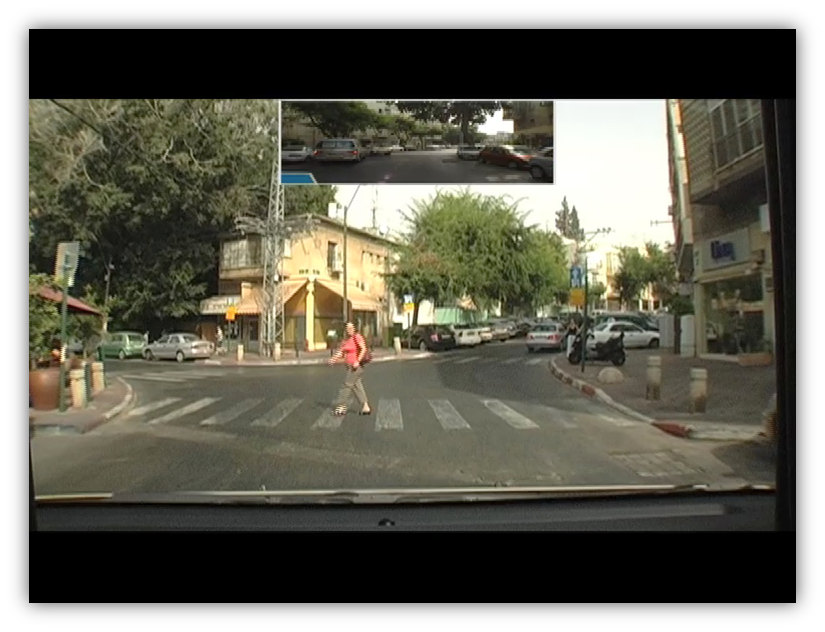
This is a new publication related to hazard perception among elderly drivers. We compared HP abilities using a driving simulator and the video observation technique. As much as the simulator graphic language allowed, our simulated scenarios were replications of the observed video scenes, as shown in the examples below.
Snapshot examples of scenarios in the video observation technique

Snapshot examples of scenarios in the simultor.

To read more see:
Bromberg, S., Oron-Gilad T., Ronen, A., Borowsky, A. and Parmet Y. (in press), The perception of pedestrians from the perspective of elderly-Experienced and Experienced drivers Accident Analysis and Prevention, 2010.
http://dx.doi.org/10.1016/j.aap.2010.12.028
Abstract
We examined hazard perception (HP) abilities among elderly-experienced and experienced drivers, with regard to the presence of pedestrians in residential areas. Two evaluation methods were used; a) observation of traffic scene videos and pressing a button when a hazardous situation was identified, and b) driving in a driving simulator. The results of the video observation method showed that elderly drivers had a longer response time for hazard detection. In addition, four of the eight pedestrian-related events were difficult for elderly drivers to perceive when compared to experienced drivers. Elderly drivers, shown to have limited useful field of view, may also be limited in their ability to detect hazards, particularly when located away from the center of the screen. Results from the simulator drive showed that elderly drivers drove about 20% slower than experienced drivers, possibly being aware of their deficiencies in detecting hazards and slower responses. Authorities should be aware of these limitations and increase elderly drivers’ awareness to pedestrians by posting traffic signs or dedicated lane marks that inform them of potential upcoming hazards.
Act and Anticipate Hazard Perception Training – AAHPT
Posted by Tal Oron-Gilad in driving skills, Transportation & Safety on December 12, 2010
AAHPT is a research effort aimed toward developing innovative training strategies for Hazard perception among young-inexperienced drivers.
- AAHPT is still in its development stages. Nevertheless several experimental phases have already been completed
- Initial findings concerning AAHPT training methodologies are available, those are constantly embedded into future development directions.
AAHPT principles
- Intended for novice drivers who have already obtained the basic skills of driving (i.e., vehicle handling and maneuvering)
- Enriching driving experience in a short period of time (i.e., in a condensed way)
- Exposure to diverse real life driving situations (see below, residential, sparsely populated urban and inter-city areas)


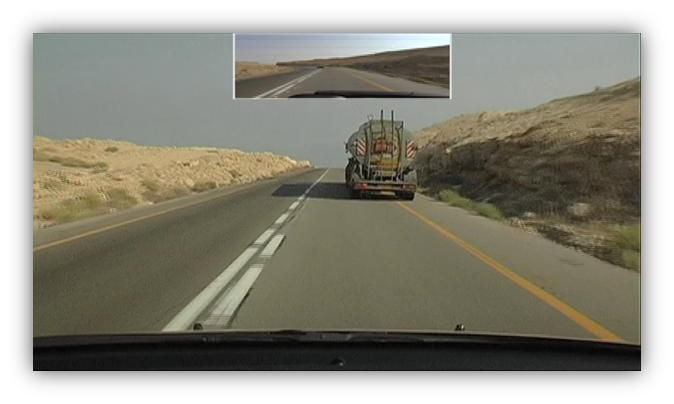
- Training- Actual hazards vs. Testing- Potential hazards (i.e., less salient situations)
- Data driven events-not are defined a priori (i.e., there is no one single master solution)
- Goal standard of experienced drivers (performance of young-inexperienced is compared to a pool of data obtained
- Variety of HP measurements
AAHPT variations
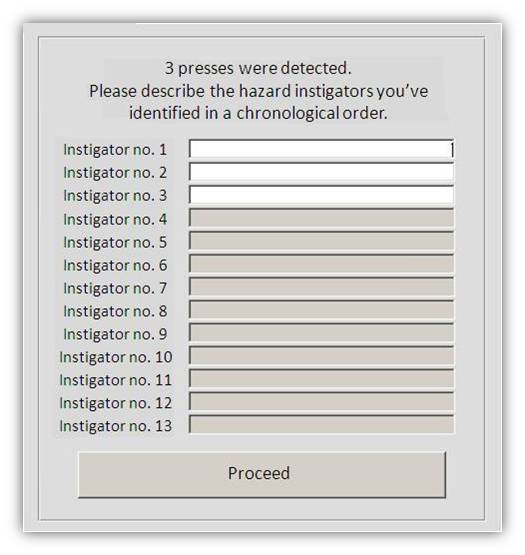
- Active – Participants observe 63 HP video-based traffic scenes and are asked to press a response button each time they detect a hazardous situation.
Participants first observe a movie press a button each time they perceive a hazardous situation. Once, completed a text box appears and they have to specify the reason for their presses.
- Instructional – The ‘Instructional’ group underwent a theoretical tutorial, where written material concerning HP was followed by video-based examples. Participants were not asked to actively respond to situations, but rather to become familiar with concepts and examples.
Here are two sample slides taken from the Instructional-based training. The first leads to a discussion on different traffic environments and the second shows a specific example of pedestrians in an urban area including tips and information. This snapshot was taken from one of the 63 videos of traffic scenes used in the AAHPT training.


- Hybrid – The ‘Hybrid’ participants observed a concise theoretical component first (similar to the ‘Instructional’ mode) followed by a shortened active component (similar to the ‘Active’ mode). This mode enables the young-inexperienced drivers to receive both theoretical information as well as to act and respond.
HPT (Hazard Perception Test)
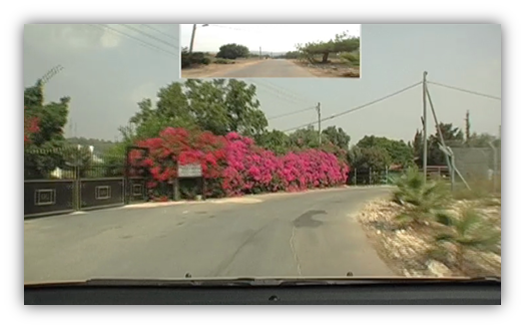
- Observe 58 HP movies and press a response button each time they detect a hazard similar way as in the Active training but different movies with less salient hazards (see following images left-training, the hazard (e.g., vehicle) is apparent whereas right-testing the hazard is not apparent ,i.e., potential danger).

- Classification task – similar to the one used in Borowsky, Oron-Gilad and Parmet, 2009(see also www.icttp.com/presentations/pdfs/O163.pdf).
To read more:
Borowsky, A., Oron-Gilad, T., Meir A. and Parmet Y. Human Factors and Ergonomics Society’s 54th Annual Meeting. California, September 27-October 1, 2010.
Meir, Borowsky, Oron-Gilad, Parmet and Shinar. Act and Anticipate Hazard Perception Training for Young-Inexperienced Drivers, The 3rd International Conference on Applied Human Factors and Ergonomics (AHFE), July 17-20, 2010. see book chapter online http://www.crcnetbase.com/doi/abs/10.1201/EBK1439835074-c15
-
You are currently browsing the archives for the Transportation & Safety category.

 Human Factors Engineering